Industry Advocacy
Taking Nebraska’s Infrastructure Concerns to Washington
Most of what Valley Corp does happens at ground level, or in many cases, below it. But some of the most important work for Nebraska’s future does not happen in a trench at all. It happens in meeting rooms on Capitol Hill, where funding decisions are made that shape what gets built back home for years to come.
This past May, Jeff Grady (Valley Corp vice president) and Tanner Almery (Valley Corp senior project manager) traveled to Washington, D.C. for NUCA’s annual Washington Summit. Jeff is the also the current president of NUCA Nebraska, the state chapter of the National Utility Contractors Association, and he and Tanner went on behalf of the whole industry, not just Valley Corp. Their job for the week was simple to say and harder to do: make sure Nebraska’s leaders understand how much the state’s aging water and wastewater systems depend on federal funding that is up for renewal right now.
Tanner, who has been with Valley Corp for about 8 years and has been involved with NUCA since he started, said the work NUCA does affects us, but it really matters for every utility contractor and every community across the state.
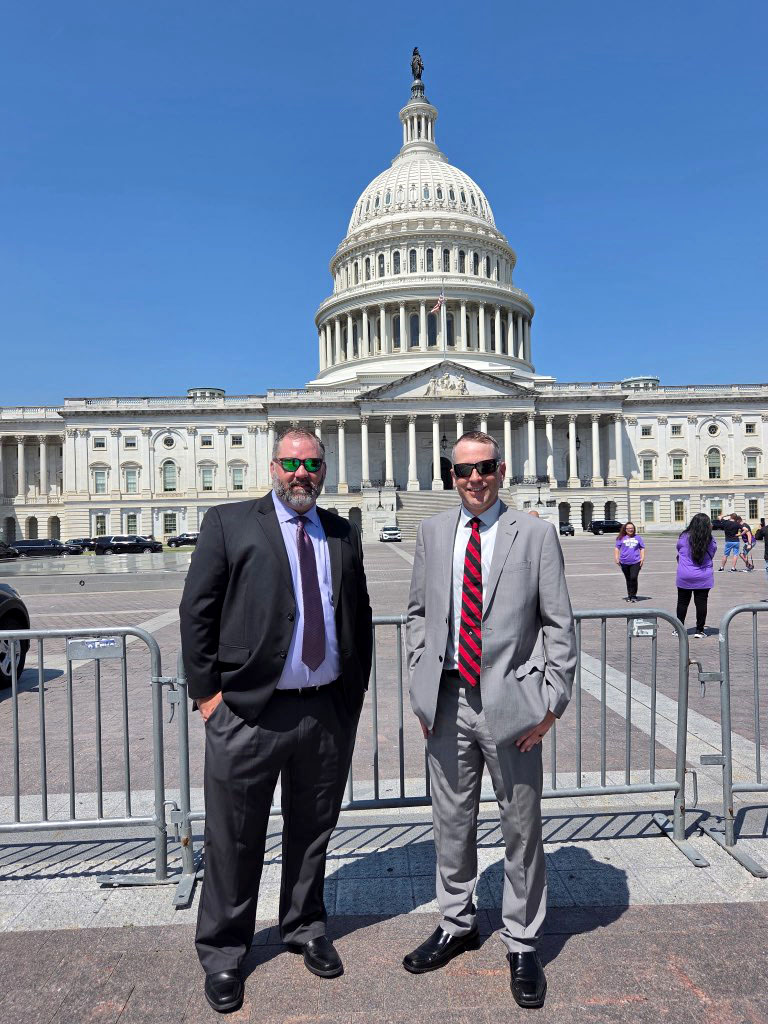
Valley Corp’s Jeff Grady and Tanner Almery at the U.S. Capitol in Wahsington DC
What the State Revolving Fund Does, and Why It Matters
At the center of the conversation was the State Revolving Fund (SRF). It is not a household name, but it touches almost every household in Nebraska.
Here is how it works in plain terms. The federal government sends money to the states, which use it to finance water and wastewater projects. That means clean drinking water lines running to homes, sanitary sewers carrying waste away safely, and storm sewers keeping streets and basements from flooding. The funding is structured as low-cost financing, which keeps pressure off local ratepayers who would otherwise bear the full cost.
Jeff points to research showing that every $1.00 invested through these programs returns roughly $3.00 to the state economy. When you consider how much of that work is labor, materials, and equipment sourced close to home, that return is easy to believe – and eventually feel.
The timing is what made the trip urgent. Federal support for these water programs is at a turning point this year, with key deadlines arriving around the end of the federal fiscal year on September 30. On top of that, the current budget proposal on the table would cut SRF funding by close to 90 percent. That is a proposal, not a decision. Congress sets the final numbers through the appropriations process, and these programs have historically drawn support from both parties. But a cut of that size would slow or stall projects across the state, which is exactly why having Nebraska voices in the room matters.
If there was one thing both men brought home, it was that two people from the Midwest in a room full of decision-makers is good, but more would be better. The point of participating in events like this is not to be heard once, but to build a habit of involvement across the whole industry, at every level.
“It is always good to have more people involved,” Tanner said. “Volunteering at local events, serving on a committee, or making the trip to Washington, it all adds up. The more voices we have, the bigger the response.”
A Day on Capitol Hill
The week followed a steady rhythm. NUCA’s national meetings filled the first full day, and the next day was spent entirely on Capitol Hill meeting with Nebraska’s congressional delegation.
The team connected with all five of Nebraska’s offices. They met directly with Senator Deb Fischer, sat down with staff for Senator Pete Ricketts and Representative Don Bacon, and connected with Representatives Adrian Smith and Mike Flood.
Some of those conversations took place at the “Nebraska Breakfast,” a Wednesday-morning tradition started by Senator Hugh Butler in 1943. It is the oldest ongoing gathering of its kind on the Hill, a standing chance for Nebraskans in Washington to sit down with the people who represent them.
“They see the value in this,” Jeff said of the delegation. “These bills are usually bipartisan. With the polarized political atmosphere in Washington, the challenge right now is just getting things across the finish line. Fortunately, our representatives seem to realize the value in supporting this for our state and the nation as a whole.”
Tanner came away with the same read. The conversations were positive across the board, he said, though tempered by the reality of a divided Washington. Water and infrastructure funding have long been bipartisan issues, and the delegation seemed confident it could come together. The question was timing, not whether the support was there.
A national industry assessment estimates it will take roughly $4.8 trillion over the next 20 years just to keep the country’s water and wastewater systems operating safely and reliably. Nebraska’s share of that need is real, and it is exactly what this trip was about. You can see the state-by-state breakdown here. [click button below for report]
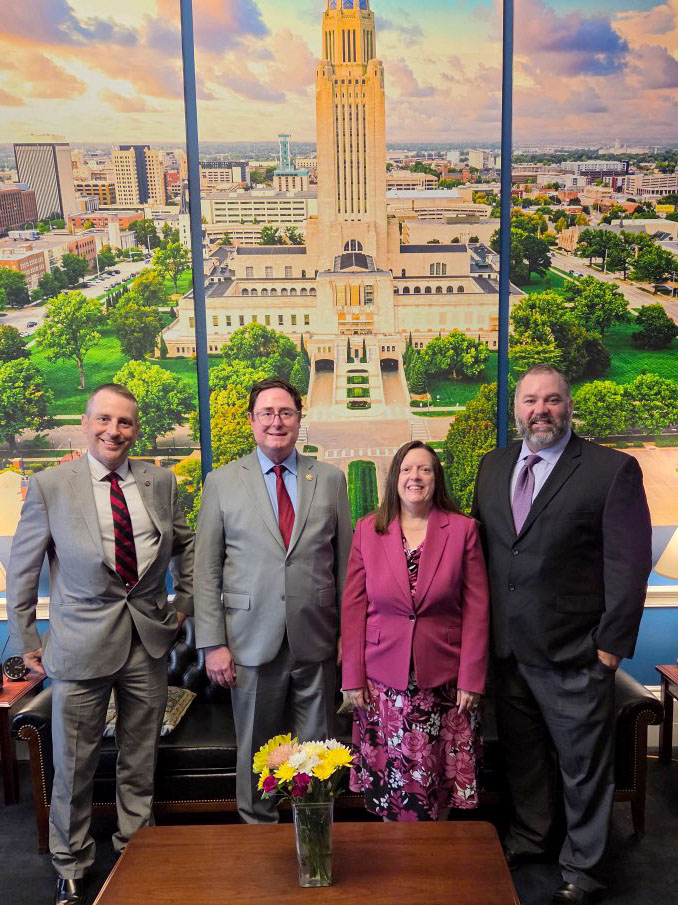
[Left to Right] Tanner Almery, Congressman Flood, Janet Seelhoff (NUCA of Nebraska) and Jeff Grady
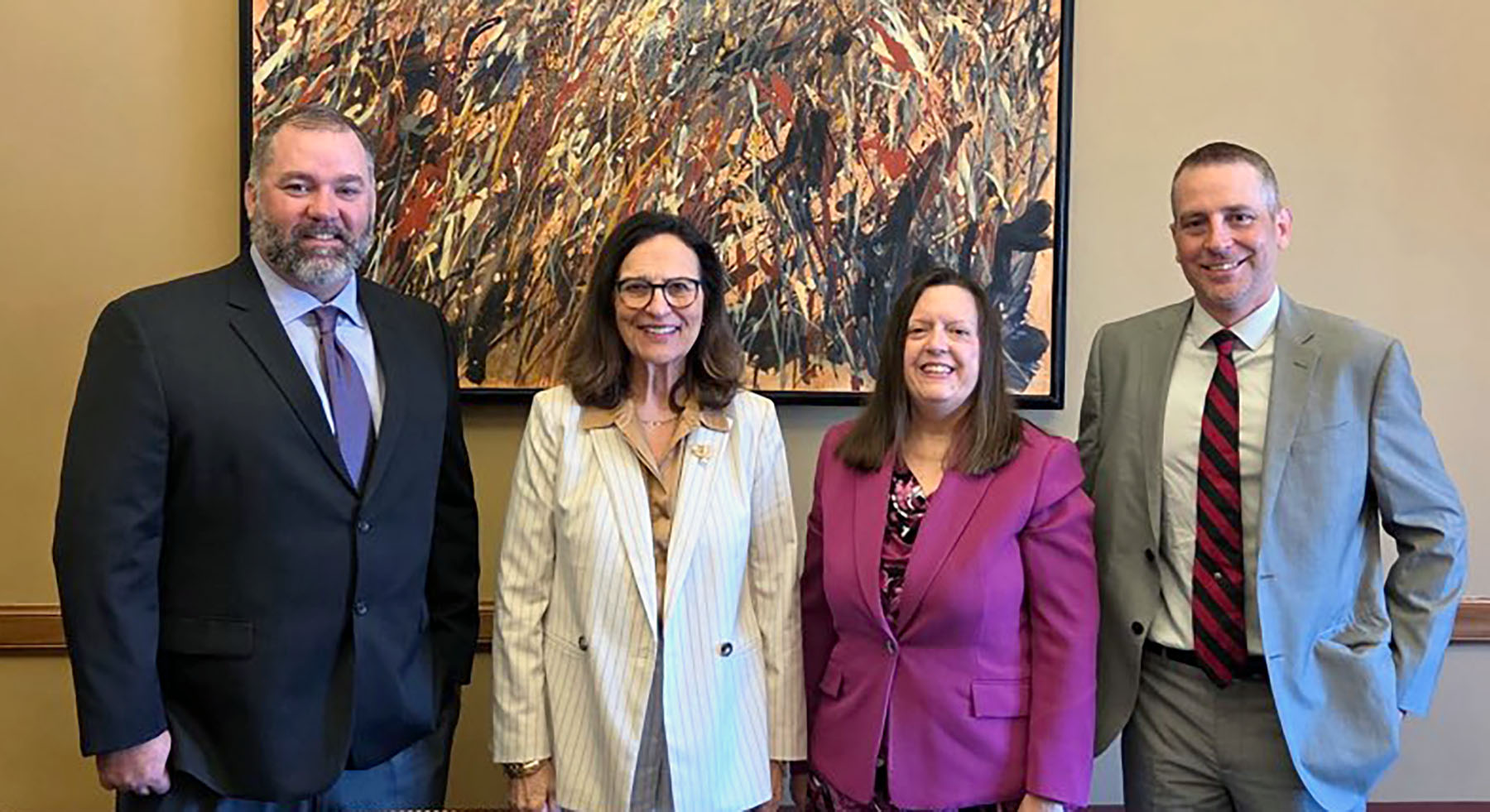
[Left to Right] Jeff Grady, Senator Fischer, Janet Seelhoff , and Tanner Almery
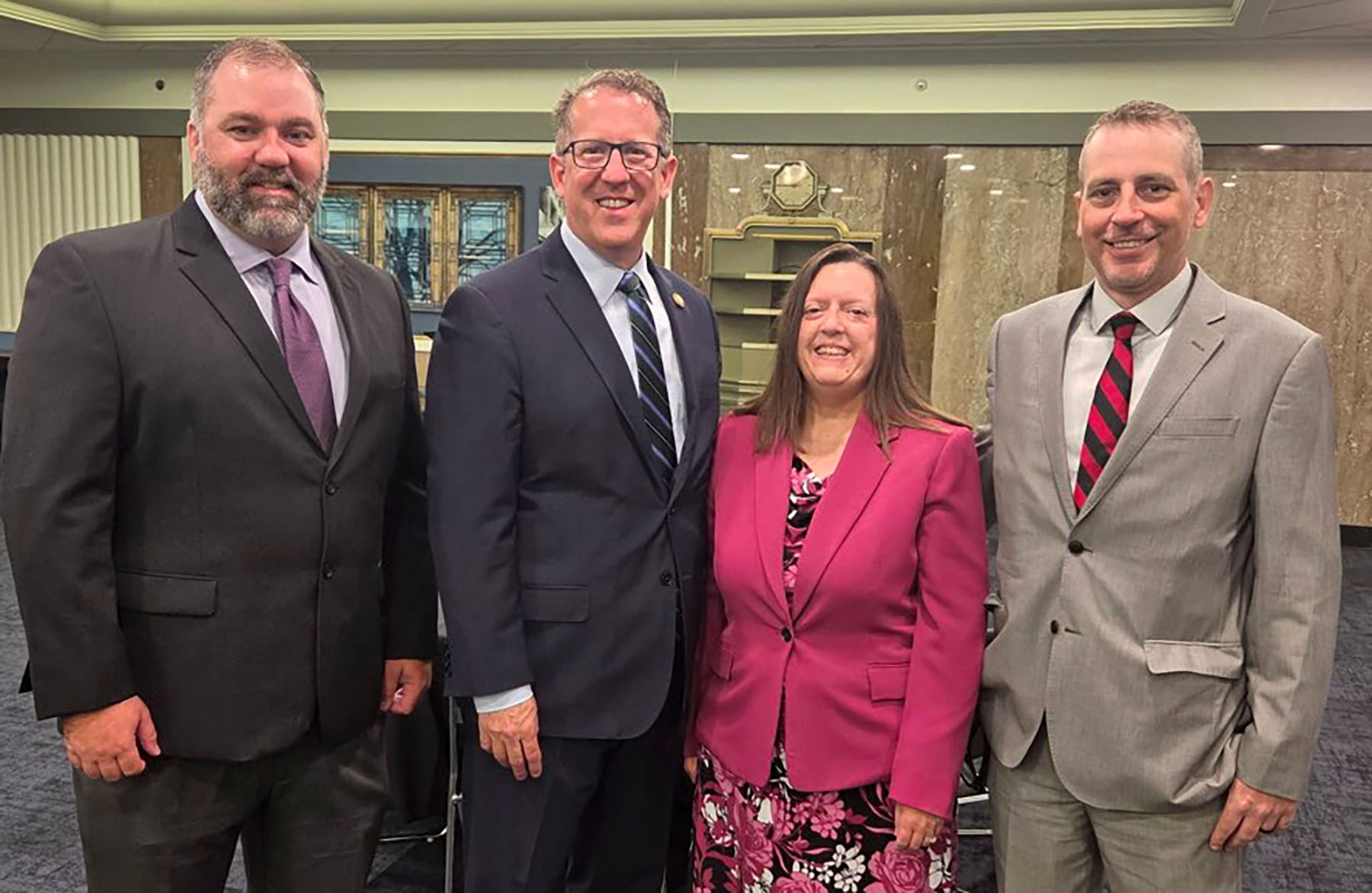
[Left to Right] Jeff Grady, Congressman Smith, Janet Seelhoff, and Tanner Almery
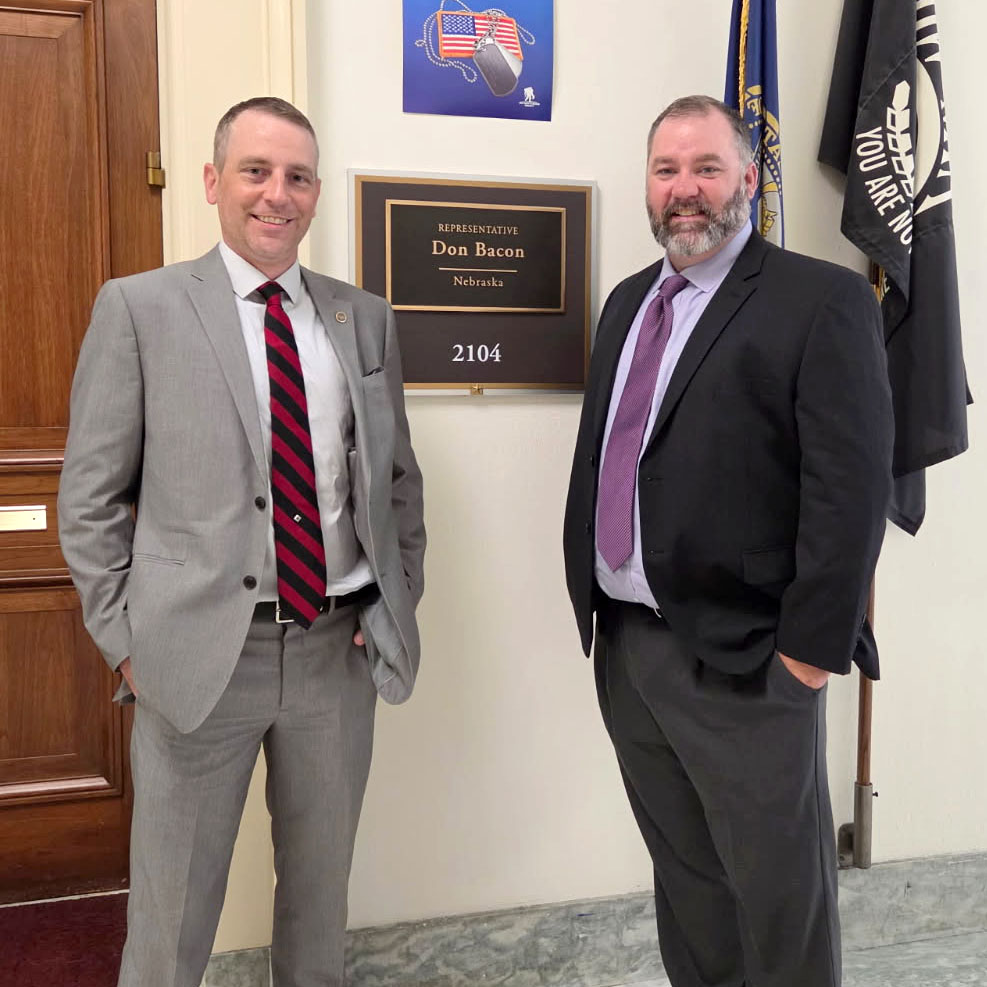
Tanner and Jeff at Congressman Bacon’s office before meeting with his staff.
What This Means Back Home in Nebraska
It is easy for a number like the State Revolving Fund to feel abstract, but the work it supports is tangible and real, positively impacting the lives of everyday Nebraskans.
Several jobs Valley Corp has worked on are tied to this funding. The new wastewater work in Plattsmouth, where the crew installed roughly 20,000 feet of pipe, drew on SRF dollars, as does a water project the team is currently working on. Down in Lincoln, a major water pipeline already underway is set to continue for years as land acquisitions move forward. And across the metro, the long job of replacing aging lead service lines depends in part on this same source of money. Jeff noted that the Metropolitan Utilities District still has an estimated 15,000 to 16,000 known lead lines left to replace in the Omaha area alone.
That is the through line. This funding is not about any one company’s work. It is about clean, reliable water for Nebraska families, and a steady flow of projects that keep skilled people employed across the state.
The need reaches well beyond the metro. Tanner points out that a lot of this funding ends up in Nebraska’s smaller towns, where aging systems and tight local budgets make it hard to keep up. For those communities, federal support is often the difference between fixing a problem now and waiting until it turns into an emergency.
The Roads Conversation, Too
Water was the main reason for the trip, but it was not the only one. The team also advocated for surface transportation funding, the federal money behind highway and bridge projects.
While they were in town, that effort took a real step forward. The House Transportation and Infrastructure Committee advanced a five-year, $580 billion surface transportation bill out of committee on a strong bipartisan vote. It still has a road ahead of it, a full House vote and then the Senate, before anything becomes law.
Why Valley Corp Keeps Showing Up
This is not the first time someone from Valley Corp has carried Nebraska’s case to Washington. Jeff is the third person from the company to serve as president of NUCA of Nebraska and the company stays in regular contact with our state representatives on issues that affect the industry and the communities it serves.
“It does nothing but benefit all Nebraskans,” Jeff said. “It does not just have to be Valley Corp that gets work through this funding. Either way, it benefits everybody. So, we are going to keep being a voice and one of the leaders out there on the front edge of it.”
For a third-generation, family-owned Nebraska company, that kind of commitment is not a side project. It is part of the job. And Jeff has already decided he is going back next year.
He will just be checking the forecast first. The team got caught in record heat the day they wore suits to the Hill. As Jeff put it after a long, warm morning in a jacket and tie, he is a “boots man”, not a “suits man.” The work, in Washington or in a trench, is the same either way.